Front Range nights have a crisp clarity to them. On clear evenings, the sky above Denver reads like a topographic map of stars, while the foothills throw long silhouettes across yards and patios. Outdoor lighting here is part safety, part comfort, and part show. When it is done well, it respects the dark and highlights what you love about your home. When it is done poorly, it blinds guests, annoys neighbors, and chews through fixtures after a single winter.
Over the past fifteen years working on exterior lighting in Denver and across Colorado, I have watched the same patterns repeat. Homes look better with less light than most people expect. UV, altitude, and temperature swings punish cheap finishes and weak gaskets. And the best plan on paper fails if the fixtures cannot stand up to late April snow, late summer hail, and sprinkler overspray. Below is a practical map of denver outdoor fixtures, styles, and budgets that hold up along the Front Range, with notes drawn from real jobs, not only spec sheets.
What the Denver climate asks of your fixtures
At 5,280 feet, sunlight is harsher. Powder-coat finishes chalk faster, and plastics can turn brittle. The daily cycle from warm afternoons to cold nights stresses seals. Add windborne grit, a few deep freezes, and a sudden June hailstorm, and you have the full test suite. This is the reality behind many customer complaints I have seen: a path light that fogs up by January, a wall sconce with rust blooms by spring, a transformer tripping after a wet snow and refreeze.
When you shop for denver outdoor lighting, look for specific clues that manufacturers built for these conditions. Cast brass or marine-grade aluminum for ground fixtures. Powder coat rated with 5,000-hour UV resistance or higher. Silicone gaskets that remain pliable below 0 degrees. A fixture IP rating of IP65 or IP66 for exposed spots. And for anything installed near irrigation or snow load, a drain path that is obvious to the naked eye. Those details matter more along the Front Range than the abstract lumen count.
Line voltage, low voltage, or solar
Outdoor lighting in Denver sorts into three power types, each with its place.
Line voltage at 120 volts is standard for wall sconces at entries and garage doors, and sometimes for flood or security lights. It offers strong output and easy switching, but it also requires proper boxes, conduit or cable rated for direct burial, and GFCI protection. If you plan a renovation or a new build, you can coordinate with an electrician to pull new runs before finishes go up. On existing homes, fishing wires through stucco or brick can double the cost of denver exterior lighting upgrades.
Low voltage at 12 volts drives most denver landscape lighting, including path lights, spot and flood accents, and deck or step lights. A good multi-tap transformer with stainless housing, installed above grade and out of snow pockets, can power dozens of fixtures. Cable routing is flexible, burial is shallow, and shocks are unlikely. For most garden projects, low voltage is the sweet spot for safety, control, and expandability.
Solar has improved, but winter sun angles and snow cover limit reliability across Colorado outdoor lighting. A south-facing, unobstructed installation can work for marker lights or downlights under eaves where panels stay clear. For path lights that must run every night at a consistent brightness, solar still disappoints by February. I recommend solar only for decorative accents or remote spots where wiring would scar a historic patio or prized lawn.
Matching color and beam to Denver nights
Much of the charm of denver garden lighting comes from restraint. Warm color, careful beam control, and soft contrasts echo the tones of masonry and timber common in the region.
Color temperature between 2700K and 3000K flatters brick, stone, and native plantings. Cooler light above 3500K brings a metallic edge to bluegrass and makes stucco read cold, especially in snow. For architectural highlights, high CRI options, 90 or better, help red cedar glow the way it does at sunset.
Beam control matters more than raw lumens. Narrow beams, 15 to 25 degrees, create sculptural uplight on aspens and accent boulders without spilling into windows. Wider beams, 35 to 60 degrees, blanket low shrubs or wall sections. For denver pathway lighting, look for fixtures that throw a crescent pool forward and to the sides rather than a hard cone straight down. Integrated shields and glare guards are worth the slight upcharge, because they keep light where it serves people and plants.
A quick planning checklist that prevents rework
- Walk the property at night and note hazards, focal points, and dark holes on a printed plan. Decide which zones you want on separate timers, such as front yard, backyard, and entertainment areas. Verify power sources and distances, then pick transformer sizes with 15 to 25 percent spare capacity. Choose color temperature and finish once, and carry that palette throughout to avoid a patchwork look. Test a sample set for a week before full installation, especially where neighbors share sightlines.
The styles that suit Denver architecture
Across neighborhoods from Park Hill to Highlands Ranch to Golden, the architecture swings from 1920s brick bungalows to contemporary boxes with vertical cedar. The trick is not to match fixture style to house label, but to match light behavior to building massing.
Bungalows and Tudors benefit from warm, modest sconces that sit tight to the wall and shield the lamp from street view. I have had luck with simple box sconces, frosted diffusers, and dark finishes that recede by day. For porches, a dimmable ceiling mount at 2700K lets you drop to a friendly glow in winter and boost for summer gatherings.
Midcentury ranches do well with low-profile step and wall lights that graze horizontal planes. Instead of tall bollards that fight the line of the house, I prefer compact path lights tucked into planting beds, and a few controlled uplights that pull texture from stone veneer.
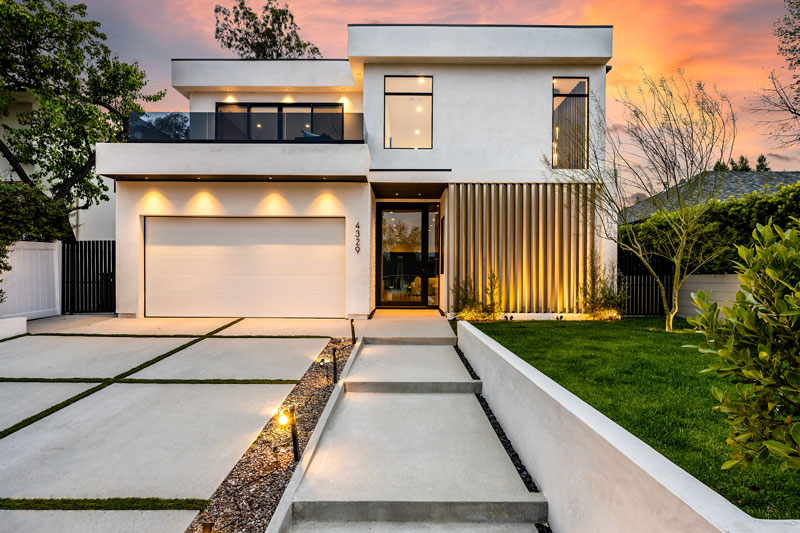
New builds with flat roofs and large glass panes call for very disciplined denver lighting solutions. The glass reads as a mirror at night, so fixtures must not glare. Recessed soffit downlights with narrow beams, shielded wall packs, and slim linear grazers under capstones craft a soft perimeter without hotspot clutter. Use one or two statement pieces, not five. The eye tires quickly of sparkle.
Historic or mountain styles around Denver and the foothills can carry lantern shapes and hammered finishes, but size them to the facade. I see too many giant lanterns flanking a standard three-foot door. The right lantern height sits about one third the height of the door and mounts at eye level so the filaments do not flash straight out.
Pathway and step lighting that survives winter
Snowplows and shovels change the game for denver pathway lighting. Anything set within 12 inches of a driveway edge or walkway is a bad bet unless it is stout enough to take a hit. I learned the hard way years ago on a Wash Park project where the client loved a delicate mushroom head fixture. The first March storm bent three of them. We swapped to short, cast-brass path lights with domed tops and a heavy stem set into a deeper spike. They went through eight winters without a casualty.
For steps, LEDs encased in brushed stainless or powder-coated aluminum, mounted under each tread nosing, give an even wash that never blinds. On poured concrete steps, an undercap strip set into a shallow reglet looks clean, but plan it before the pour. Retrofitting usually means surface channels and more visible hardware.
If you need posts to define a curve, use bollards that are less than 24 inches tall with side-facing windows, not top emitters. That height stays below shovel strike and tends to cast a better horizontal spread.
Trees, plants, and the art of restraint
Landscape lighting in Denver has a distinct seasonal rhythm. Leaf drop exposes fixtures and beams in fall, then snow turns modest washing into bright reflectors. That argues for lower lumen outputs than you might choose in a climate with evergreen canopies.
Aspens read beautifully with one narrow-beam uplight on the trunk and a second wide-beam up into the crown, but good shielding is crucial to avoid upward spill that punches into the sky. Blue spruce can handle a single uplight per main face. I avoid ring-lighting conifers, because it feels theatrical on residential lots.
Perennial beds shine with tiny in-ground markers or short stake spots that tuck among grasses, set low and aimed across rather than straight up. Leave room for growth. When I revisit properties a year later, I often lower intensities or remove one or two accents, because a little maturity fills the scene better than more watts.
Front-of-house security without the searchlight effect
Exterior lighting Denver homeowners ask for often blends security and hospitality. Motion-activated floods have a place, particularly above garage doors or rear entries, but select fixtures with low standby levels and modest ramp-up. Going from dark to blinding white triggers adrenaline, not comfort. A better pattern I use is a base layer of low, constant ambient light, such as soffit downlights at 20 percent, then motion events that bring dedicated task lights to 80 percent.
Dusk-to-dawn photocells simplify this pattern. For outdoor lighting systems Denver homes can maintain easily, put photocells on the transformer for landscape zones and on a master circuit for architectural zones. Layer a smart timer so you can drop backyard scenes to off at 11 p.m. While keeping front paths at low output all night.
Dark-sky sense and neighbor-friendly choices
Denver sits near prime stargazing country. Good denver outdoor illumination aims and limits spill. If a fixture’s LED diodes are visible from street level, expect a complaint. Use cutoffs, shields, and downward light. Where you have a reason to uplight a small facade or mature tree, keep beam angles tight and lumen counts moderate.
Warm color helps. So does dimming. Most 12-volt transformers now support zone dimming modules, and many 120-volt sconces ship with drivers that accept triac or ELV dimming. If you live in a denser neighborhood like Cherry Creek North, where windows sit near sidewalks, be especially gentle. I keep path lights at or below 100 lumens each and aim to notch a scene so it feels like moonlight, not a parking lot.
Budgets that make sense, from starter to showcase
Costs vary by access, trenching difficulty, and fixture count, but typical ranges in outdoor lighting Denver projects settle into tiers that can help you plan.
- Starter: $1,500 to $3,500 covers a small low voltage system with a quality transformer and 8 to 14 fixtures for a front walkway and a few accents. Use replaceable MR16 LED lamps in brass or powder-coated aluminum bodies to keep costs flexible. Midrange: $4,000 to $9,000 supports 20 to 40 fixtures split between front and back, upgraded finishes, and smart controls. Expect step lights, a few soffit downlights, and stronger beam control on trees and walls. High-end: $10,000 to $25,000 and up brings integrated LED fixtures with long warranties, custom metal finishes, in-ground well lights with drive-over ratings, and multi-zone automation tied to scenes and sensors.
When comparing quotes for outdoor lighting solutions Denver vendors provide, look closely at what is included beyond fixtures. Stainless steel or powder-coated steel enclosures for transformers, surge protection, silicone-filled connectors rather than twist caps, and cable rated for direct burial are nonnegotiables in this climate. Ask for a one-year checkup, because connections do settle and plants grow.
Materials and finishes that last at altitude
Brass remains the workhorse for denver outdoor fixtures that live in beds or along paths. It weathers to a bronze patina that fits both modern and traditional settings. It also resists corrosion from fertilizer and sprinkler overspray. Marine-grade aluminum is lighter, great for wall mounts and soffit cans, but verify the powder coat. Stainless steel looks crisp on contemporary builds, though it needs periodic wipe-downs to avoid tea staining.
Avoid thin spun aluminum for ground stakes and any fixture with a visible seam that invites water. Integrated LEDs perform well, but choose brands that publish driver life and carry at least a five-year warranty. If you opt for replaceable lamps like MR16s or G4s, select enclosed-rated LEDs that handle small sealed spaces without cooking.
Controls that you will actually use
Fancy control options mean nothing if you stop using them in March. The most dependable setup I see across outdoor lighting services Denver providers install is a photocell for on at dusk and off at dawn, layered with a timer that trims late-night hours for certain zones. Add a small set of smart switches or a lighting hub if you enjoy scenes, such as dinner on the deck or game night on the lawn. Make sure controls live in a location you visit naturally, near the back door or garage entry, not buried in a mechanical closet.
For homes with landscape lighting Denver systems spread across large lots, I separate circuits by area to aid troubleshooting. A transformer for the front and one for the back, each labeled with circuit maps. If a breaker trips or a cable is cut by a shovel, you do not lose the entire property.
Installation notes that save headaches
The National Electrical Code guides depth and protection. In practice around Denver, I have settled on a few habits that prevent callbacks. For low voltage cable, I cut a narrow slit, tuck wire at 6 to 8 inches deep where traffic is light, and use conduit sleeves under walkways and drives to allow future pulls. In planting beds with regular turnover, I coil 18 inches of slack near fixture bases so gardeners have room to shift positions without stretching connections.
Every connection lives above grade inside a junction dome or in a dry well of gravel, never underground in wet clay. I use gel-filled, heat-shrink connectors and a weatherproof cap. Transformers mount on a solid backer above snow line, typically 18 inches off grade on the leeward side of a structure. Surge protection at the main panel and on the low voltage side reduces failures during summer storms when lightning rides nearby lines.
If you are not comfortable with electrical work, hire a professional. Lighting installations Denver electricians and landscape contractors complete often include permitting for new line voltage circuits, GFCI protection, and code-compliant weatherproof boxes. A DIY low voltage run is doable if you respect the basics, but mixing 120-volt work without training courts risk.
Maintenance in a place with real seasons
Denver’s low humidity gives you a break on corrosion, yet wind and dust find seams. Plan a light service twice a year. In spring, wipe lenses, clear mulch away from fixture vents, re-aim after snow impacts, and trim plants that have grown into beams. In fall, lower intensities if reflective snow will boost brightness, check gaskets for stiffness, and replace any lamp that shows flicker. A transformer check takes two minutes, and catching heat or hum early saves a system.
For properties with significant sprinklers, audit spray direction. A slight nozzle adjustment prevents water hammer from slamming fixtures every morning. Where hard water spots glaze lenses, a vinegar-based cleaner and a microfiber cloth restore output. Do not use abrasives that scuff coatings.
Safety, code, and courtesy
Two details underpin responsible exterior lighting Denver neighbors appreciate. First, ground fault protection and bonding. Every 120-volt exterior circuit should be GFCI protected, and any metal fixture in reach must be properly grounded. If your home predates modern standards, bring it up to current code during the upgrade. Second, aim and dim to respect property lines. If light from your soffit cans, spots, or garage floods crosses into a bedroom across the fence, it is time to adjust.
HOAs across the metro often have rules about fixture color and brightness. Most accept bronze, black, or dark earth tones and discourage polished metal. Brightness caps vary, but even where no rule exists, lower is friendlier. Smart compromises avoid enforcement letters and, more importantly, sustain goodwill.
Where to spend and where to save
I once replaced a full set of eight bargain path lights after two winters, total cost more than if the client had started with quality brass. Spend on fixtures and connectors. Save on decorative bells, at least at first. Spend on transformer capacity that lets you add future zones without replacement. Save by staging projects, front yard this year, backyard next, rather than forcing a single pass with cheaper parts.
Spend on shielding and beam control whenever you light vertical surfaces or eye-level scenes. That money reduces glare, protects wildlife, and creates the calm most people actually want. Save by choosing a single warm color temperature and a cohesive finish instead of chasing trends across zones.
A few real-world combinations that work
For a Wash Park bungalow with a shady front yard: brass path lights at 2.5 watts each, 2700K, set back into beds to avoid shovel strikes, plus two narrow-beam uplights on the mature elm, each with a glare guard. A pair of frosted box sconces at the porch, dimmable. The yard reads welcoming without washing the sidewalk.
For a midcentury in Arvada: wall-integrated step lights along the patio stairs, 3000K to match the interior color palette, a single linear undercap on the seat wall, and three 25-degree spots grazing the textured brick chimney. No bollards, no overhead floods, yet the space feels finished.
For a modern home in Sloan’s Lake: recessed downlights in the front soffit, 15-degree beams spaced to avoid a runway look, two shielded, low output wall graze lights to break up a large stucco plane, and minimal path markers set into planters. Backyard uses a dimmable string light run for gatherings, but it drops to off automatically at 10 p.m.
Choosing partners and parts
Look for vendors who install and service outdoor lighting in Denver through winter, not just summer build season. Ask to see an example installation at least three years old. If the finishes hold, lenses are clear, and beams tight, that tells you more than any catalog. Insist on a parts list that includes fixture bodies, lamp types or integrated modules, drivers, connectors, and transformer models. Vague quotes become expensive surprises.
If you are set on DIY, test a small zone first. Buy one each of your top three fixture choices, set them in your soil, and leave them outside for two weeks. Irrigate them, shine them into windows, and stand at the outdoor lighting sidewalk. You will learn more about denver lighting in that test than any forum thread can teach you.
The payoff for care and patience
Outdoor denver lighting works when it disappears into experience. A guest finds the steps without thinking about light. The spruce becomes quietly present rather than screaming for attention. Your kitchen spills a warm echo onto the patio, and neighbors do not see it from their bedrooms. The system hums along through a cycle of heat, hail, and hard freeze, the transformer barely warm to the touch.
If you work within the realities of Colorado, pick fixtures for durability, aim for human comfort, and keep your palette simple. Denver’s dry air and blue-black nights will reward that approach. The result is not a collection of lights, but a lived-in evening landscape that belongs where it sits, between mountains and plains, steady through the seasons.
For anyone mapping next steps, start with a walk at dusk, a pencil plan, and a few deliberate choices. The rest follows. With a clear plan, reliable materials, and attention to how light behaves in this climate, denver outdoor lights can add safety and soul to your home without overpowering the night. Whether you call it landscape lighting Denver style, exterior lighting Denver homeowners rely on, or simply a good yard light, the same craft applies. Care beats wattage, and the right fixtures, thoughtfully placed, turn a property into a place.
Braga Outdoor Lighting
18172 E Arizona Ave UNIT B, Aurora, CO 80017
1.888.638.8937
https://bragaoutdoorlighting.com/